DIY wedding décor goes far beyond sticking paper garlands onto jars. The final look depends on technical decisions made in advance: materials, construction methods and a cohesive color palette. Here, we explain what separates amateur décor from a result worthy of a professional service.
Demountable construction and storage: the technical constraint tutorials overlook
Successful DIY décor is designed to be assembled, taken apart and transported without damage. Arches, welcome signs and hanging structures should use modular screw or interlocking joints, never permanent glue or staples.
Each piece should be labeled (numbered or marked in pencil at the joints) for quick reassembly on the big day. A reclaimed-wood sign attached with piano hinges folds flat to fit in a car trunk. An arch made from wooden battens and assembled with wing bolts can be taken apart in ten minutes without tools.
This modular design approach offers a clear advantage after the reception: you can resell or donate the pieces, or store them for another use. It follows the same principle as community reuse centers, which share and rent event décor rather than producing new items for every occasion.
When you choose to make your own wedding decorations, thinking about the durability of the structures has just as much impact on your budget as on the final look.
French seasonal flowers: the choice that transforms your color palette and budget
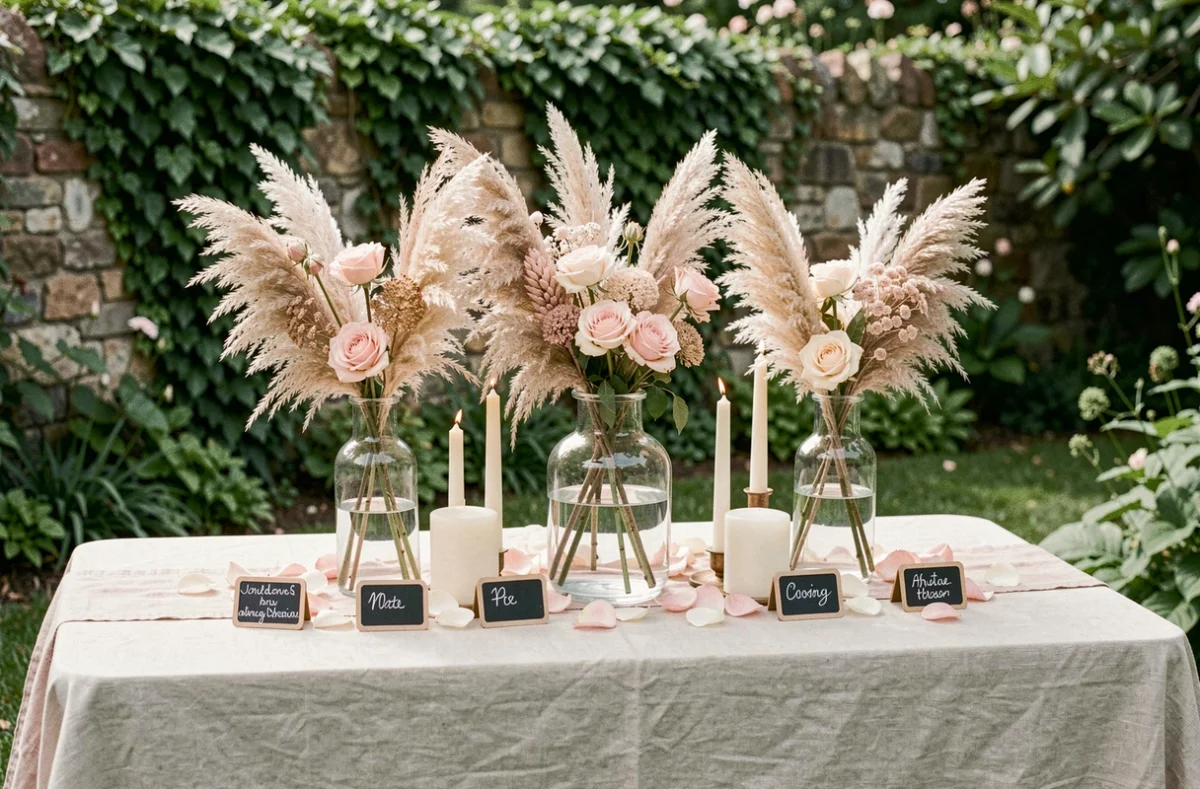
Floral décor is often the most variable part of a DIY wedding budget. A common impulse is to order imported flowers online that are available year-round. The result can lack character, and costs quickly add up.
Working with French, seasonal flowers transforms the color palette. A June wedding can feature peonies, an October wedding dahlias, and a winter wedding ranunculus. Grown locally, these varieties last longer in a vase than flowers that have spent several days in cold storage during transit.
Demand for this type of sourcing is growing. Florists in Touraine report that more and more clients are asking for seasonal flowers grown in France.
Dried flowers and mixed arrangements
Dried flowers complement fresh blooms in areas where long-lasting arrangements matter, such as place cards, boutonnieres and wall wreaths. They can be prepared several months in advance, spreading out the workload.
A mixed approach (fresh flowers for table centerpieces, dried flowers for everything else) reduces the amount of fresh flowers you need to buy and limits waste after the reception. Dried arrangements can go home with guests or be kept as décor.
DIY wedding décor budget: where to make trade-offs
The décor budget falls into three distinct categories, and trade-offs should be made between them, not within each one.
- Raw materials (wood, fabric, paper, wax): the least expensive category if you source reclaimed items. Pallets, wine crates, leftover linen from a tailor, jars collected from friends and family. Sourcing reclaimed materials takes time, but can cut material costs by three or four times.
- Flowers and greenery: the category most affected by timing. Ordering out-of-season or imported flowers drives up the price. A French-grown dahlia in October costs a fraction of an imported peony in November.
- Consumables and finishing touches (candles, ribbons, printing, paint): a frequently underestimated category that adds up. Set a spending limit for each category before you start shopping to avoid overspending.
A common mistake is to save on raw materials, then spend freely on small decorative supplies. A shared spreadsheet for everyone involved in the preparations makes it easy to track every expense in real time.

Table centerpieces and ambient lighting: two elements to plan together
Table centerpieces and ambient lighting work as a system. A raw-wood centerpiece with pillar candles creates a very different effect depending on whether the room is lit with warm filament string lights or white LED spotlights.
DIY table centerpieces: materials and proportions
An effective centerpiece follows one simple rule: never exceed 25 cm in height, so guests can see one another. Low arrangements on wood slices, surrounded by small glass containers with short-stemmed fresh flowers, remain the easiest format to see across the table.
Wood (slices, crates, serving boards) provides a neutral base. Flowers and textiles (napkins, linen table runners) add color. Limiting the palette to two or three shades prevents a visually cluttered look.
Candles and string lights: creating a cohesive atmosphere
Pillar candles or glass votives placed directly on the table create low points of light. Warm-white LED string lights hung overhead or wrapped around beams provide general ambient lighting. Mixing different color temperatures disrupts the atmosphere: make sure all light sources fall within the same range (2,200 to 2,700 kelvins for a warm glow).
Even a quick lighting test at the venue lets you adjust the number of string lights and candles before the big day.
What happens to the décor after the reception? Plan ahead from the start
Décor designed to be thrown away the next day wastes time and money. Factoring in what will happen to each item from the outset changes the way you shop.
Fresh flowers can be given to guests at the end of the evening as small bouquets prepared in advance. Demountable wooden pieces can be resold on secondhand marketplaces or lent to another couple. Partially used candles can still be used at home.
Designing every decorative element with a second life in mind reduces waste and makes the time investment go further. This approach, in line with the growing reuse movement in the events industry, also gives the project a stronger ethical foundation without adding to the cost.