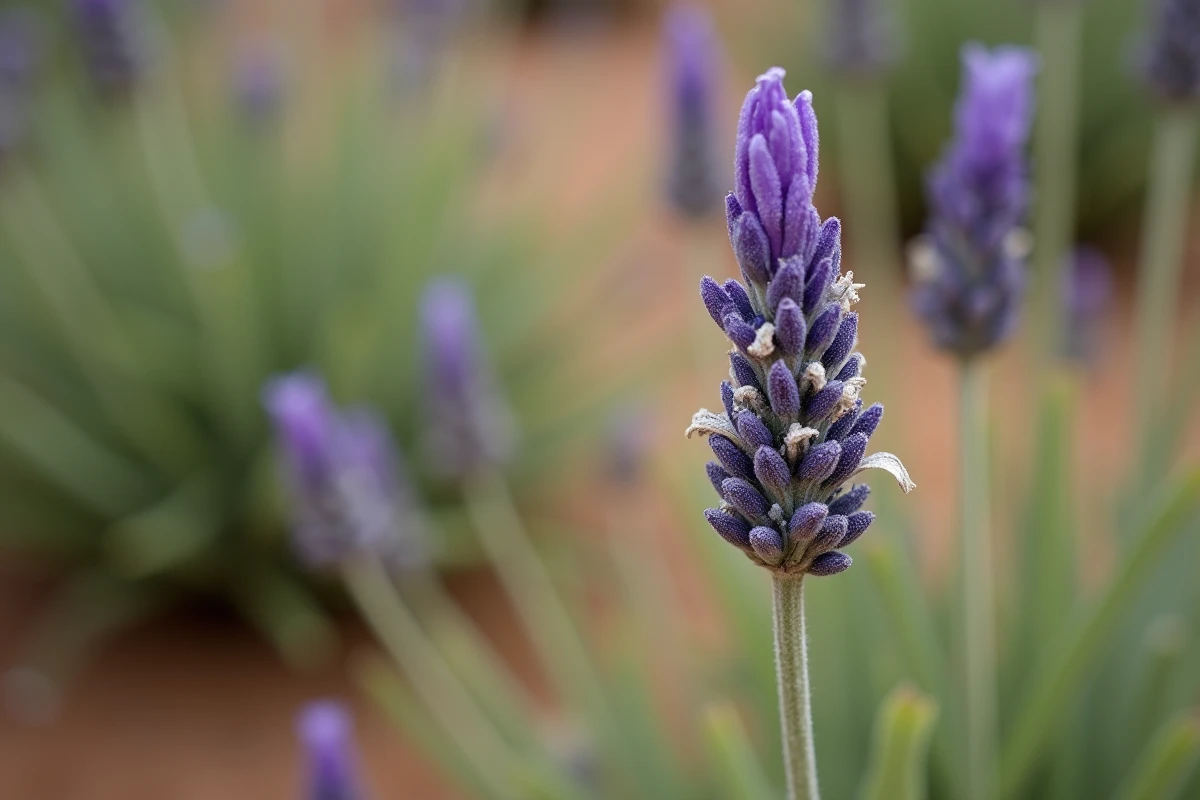
The decline of a lavender plant is rarely explained by a single factor. Before suspecting a pathogen, we recommend a differential diagnosis that incorporates soil pH, pruning schedule, and the water history of the plot. Too many fungicide treatments are applied to lavenders whose problem is strictly nutritional or mechanical.
Differential Diagnosis: Nutritional Chlorosis or Fungal Pathology on Lavender
Leaf yellowing on Lavandula angustifolia or L. x intermedia often triggers a reflex for antifungal treatment. In a significant proportion of cases, the problem stems from a soil pH below 6-6.5 which blocks the absorption of iron and magnesium. The resulting chlorosis closely mimics a foliar disease.
Correction involves a calcium amendment (lime or crushed limestone) combined with an application of iron chelates or magnesium sulfate. Symptoms disappear without fungicide, confirming the diagnosis retrospectively. We observe that this confusion between deficiency and disease particularly affects clay-loam soils in degraded oceanic climates.
To accurately identify common lavender diseases, it is essential to first exclude this mineral imbalance through a soil analysis. A pH test using a probe or colorimetric kit is sufficient as a first step.
Another diagnostic trap: the confusion between drying due to excess water and fungal attack. A waterlogged soil causes purely asphyxiating root browning, without the presence of mycelium. The smell of the roots (foul in the case of pathogenic rot, neutral in the case of simple asphyxiation) remains a reliable field indicator.
Phytophthora and Root Rot: Identification on Lavender and Risk Thresholds
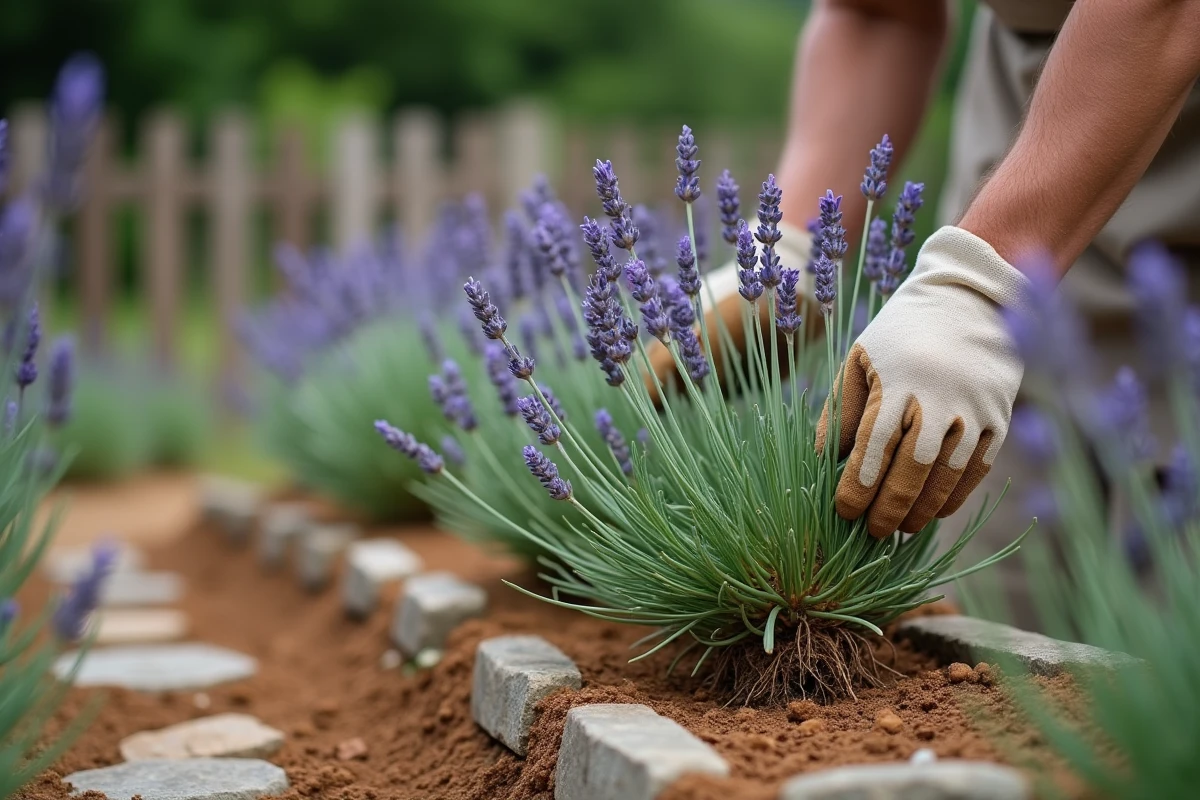
Phytophthora root rot is the most destructive fungal threat to lavender in poorly drained soil. The pathogen thrives as soon as water stagnates at the collar for several consecutive days, particularly in mild and humid winters.
Symptoms progress quickly: unilateral wilting first (one half of the clump collapses), followed by generalized browning of the foliage and peeling of the bark at the base of the stems. When uprooting the plant, the roots show a brown-black coloration and disintegrate under the fingers.
No reliable curative treatment exists once the infection has established in the root system. Prevention relies on three axes:
- Planting on mounds or slopes to ensure gravitational drainage, especially in clay-rich soils
- Spacing the plants sufficiently to promote air circulation at the collar and limit local humidity
- Avoiding any thick organic mulch in direct contact with the collar, which maintains moisture conducive to the development of Phytophthora
In already affected plots, we recommend not replanting lavender in the same location for several seasons. The fungus persists in the soil in the form of resistant dormant spores.
Pruning Schedule and Fungal Vulnerability of Lavender
The link between pruning date and health risk remains underestimated in most popular guides. Late pruning in autumn exposes cut wounds to winter rains, creating direct entry points for canker and twig rot agents.
The optimal window is just after flowering, in late summer. At this stage, the plant heals quickly due to still high temperatures and sustained metabolic activity. We prune above the current year’s wood, without descending into the old, lignified wood that regenerates poorly.
A light shaping prune in early spring is still possible, but it should never affect the still dormant parts. On lavandin varieties (L. x intermedia), which are more vigorous, the margin for maneuver is slightly wider, but the principle remains the same: never prune when conditions favor prolonged moisture on the cuts.
Pests Vectoring Decline: Lavender Leafhopper and Bark Beetle
The leafhopper Hyalesthes obsoletus carries a phytoplasma responsible for stolbur, a systemic disease that causes yellowing, flower deformation, and the gradual decline of clumps. The insect feeds on the roots of weeds before migrating to lavender, making direct control complex.
Mechanical weeding of the immediate surroundings of the plot, particularly of bindweed and nettles, reduces leafhopper pressure by eliminating its intermediate hosts. Classic insecticide treatments show limited effectiveness since the vector operates underground.
The lavender bark beetle burrows galleries in the woody stems, causing the sudden drying of entire branches. The characteristic symptom is a branch that dies in isolation while the rest of the clump appears healthy. When cutting the affected stem, one can observe the egg-laying galleries beneath the bark.
- Immediately remove and burn infested branches to limit spread
- Maintain regular pruning that eliminates old wood where the bark beetle prefers to lay eggs
- Monitor plants weakened by summer drought, which are preferred targets of the pest
Impact of Climate Change on These Pests
The combination of milder winters and hotter summers observed in European lavender-growing areas is changing the dynamics of these populations. Reproductive cycles are accelerating, and altitudes or regions once spared are becoming vulnerable. This increasing pressure reinforces the need for a preventive approach focused on the vigor of the plant rather than on curative treatment.
The best lever remains the quality of the planting: well-drained soil with suitable pH, fully sunny exposure, and timely pruning produce plants capable of resisting moderate pest pressure without chemical intervention. When several branches die simultaneously on a well-maintained clump, it signals a root or systemic problem that exceeds the mere surface pest.