A record number of applications, queues for open house days, online forums flooded with portfolios: photography schools are far from being just a stepping stone for amateurs in search of pretty pictures. Behind the facade of light-filled workshops lies a true laboratory where technical demands meet creative fever. Each new school year, newcomers and eternal curious minds mingle, driven by the desire to transform their intuition into striking images.
Understanding what makes a photography school strong
For those aiming for a career in photography, joining a specialized school can change everything. These structured places do not just hand out manuals: they provide an ecosystem where each profile learns to build their own benchmarks. Between rigorous teachings and the freedom to explore, students advance both guided and challenged.
The training content is rich and varied. It includes as many theoretical courses as practical sessions, covering the history of photography, studio practice, digital retouching, or documentary photography. Students navigate from one universe to another: fashion, reporting, art photography, not to mention pure experimentation. This diversity nourishes their eye and openness to multiple approaches.
What changes everything are the exchanges with the teachers. Most are photographers themselves, often still active. They share their methods, but above all their perspectives, inviting each student to question their habits and sharpen their critical sense. It is in this dialogue that many take a decisive step forward.
What mastering technique really means
Photography is not just a matter of instinct or taste. Behind every striking image lies a solid mastery of equipment and tools. Schools emphasize these skills, which remain the backbone of the profession.
Here are the skills that teachers particularly emphasize:
- Mastery of the camera: Knowing how to choose and set up your camera, understanding different lenses, juggling ISO, shutter speed, and aperture—nothing is left to chance.
- Light management: Learning to tame natural light or to work with artificial sources is what gives each shot a unique depth.
- Post-production: Retouching a photo is no longer a detail. Knowledge of software like Photoshop or Lightroom is essential to enhance or correct an image without betraying it.
- Composition: The rules of composition, from framing to leading lines, are closely studied to learn how to guide the viewer’s eye and structure the image.
Learning through practice, a lever for progress
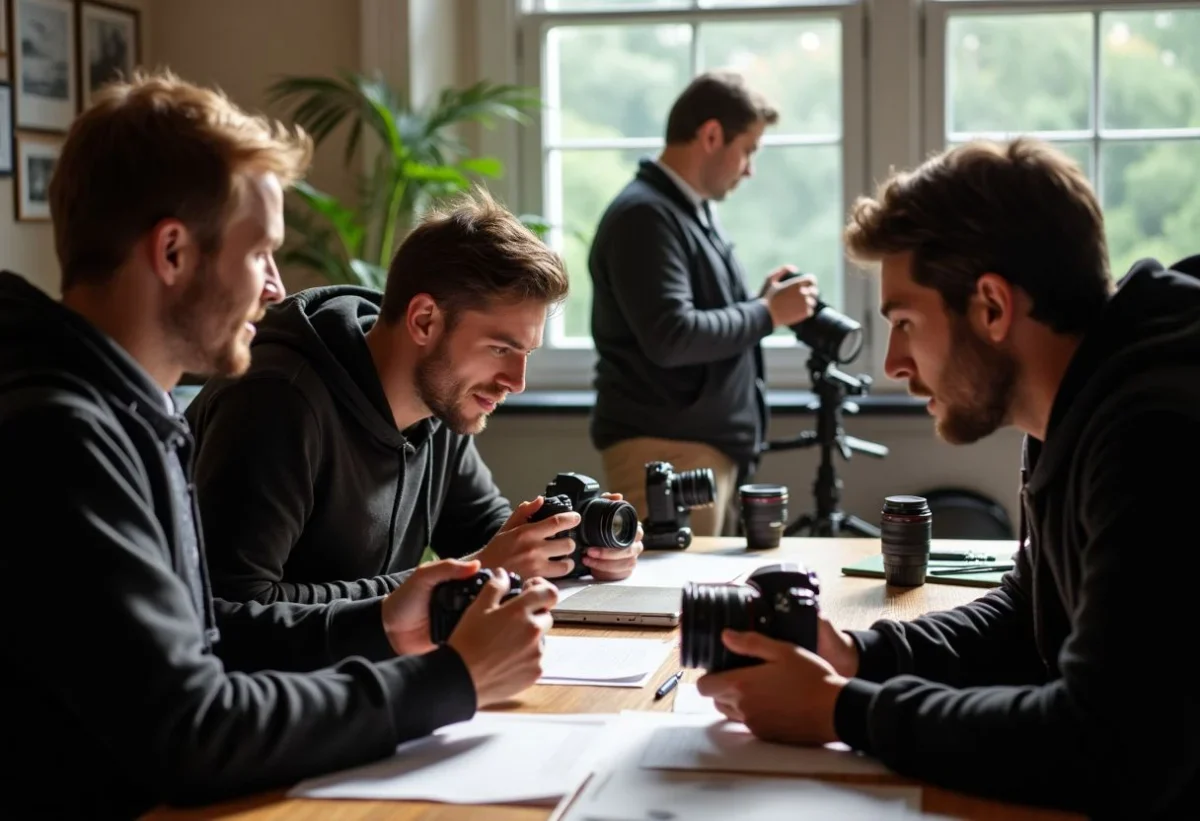
In these schools, it is impossible to settle for theory. It is in the field, camera in hand, that the student truly reveals themselves. Personal projects, imposed exercises, group workshops: every opportunity is good to test, fail, restart, and refine their style.
Collective practice sessions open the door to experimentation. A notable example? The end-of-year exhibitions, where each student must present their work in front of an often unfamiliar audience. Far from being a mere rite of passage, it is a step that pushes one to step out of their comfort zone, defend their choices, and receive direct feedback.
Another impactful experience: internships or collaborations with professionals. Whether it’s an immersion in a fashion studio or a report within a newsroom, these moments confront students with the reality of the profession. They also allow them to start building a network, that famous circle that sometimes opens unexpected doors.
How to choose the school that will make a difference
Faced with the multitude of institutions, the choice can quickly become a puzzle. However, certain criteria can help clarify the situation and avoid unpleasant surprises.
The first point to examine is the reputation of the school. A recognized institution, whose alumni have made a mark in the industry, often provides an environment conducive to success and valuable contacts. The content of the programs should also be taken into account: it is important to ensure that it aligns with one’s interests, whether aiming for press, artistic, or commercial photography.
Do not overlook the location of the school either. Some cities, driven by a dynamic cultural scene, multiply opportunities for encounters and inspiration. As for tuition fees and financing solutions, it’s best to have a clear vision before committing, as photography can sometimes involve significant material investment.
Choosing a photography school is much more than just an academic choice: it is a launchpad, a learning and emancipation ground. With the right tools and a sharp eye, each aspiring photographer writes, in their own way, a new way of seeing the world.